Showing posts with label Pak Choi. Show all posts

Thursday, 11 July 2013

Problem: growing vegetables on acid soil. Solution: raised beds

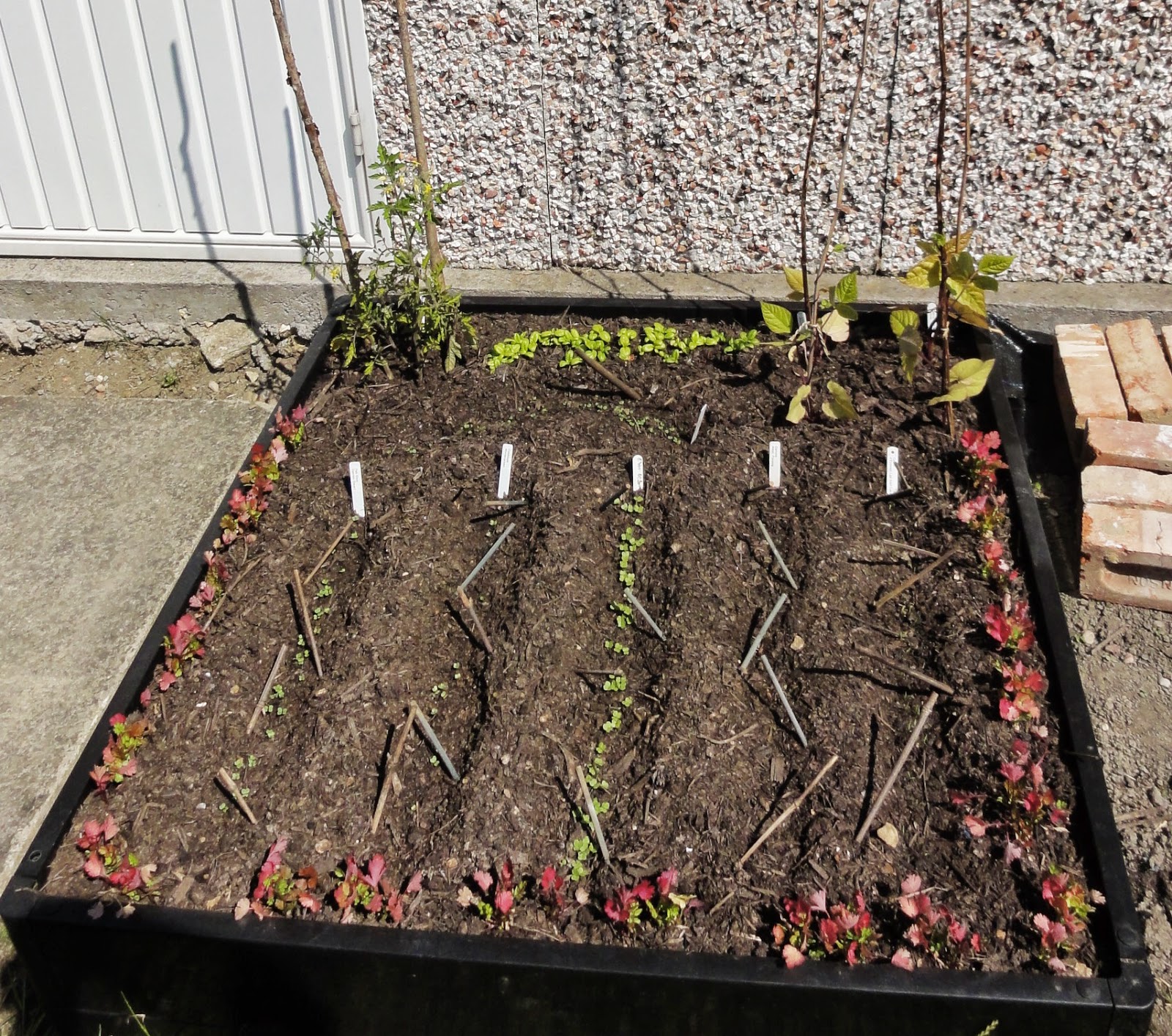
Along with recently setting up my first perennial beds, I have now also got my first vegetable raised bed growing.

first vegetable bed

I did a soil test early on, and found out two key things. One: the soil is incredibly heavy clay. The kind of clay I'm guessing Whichford Pottery might be able to use for their pots! Incredibly heavy, red-like clay (perhaps iron in it?) that is hard to stick a stake into, let along for a poor plant to try and get it's roots into.

Two: the soil is quite acidic in parts (some parts less than others). This is largely fine for most hardy perennials, most of which can tolerate a broader set of soil conditions (I did add a lot of compost to the perennial beds though, for nutrients and to improve the growing conditions). But acid soil is not much good for most vegetables as they need alkaline soil in which to grow.

This information led me to decide to dig up the grass and top soil*, about a couple of inches, and to build on this with deeper raised beds than I have previously (30cms tall rather than 15cms). By creating deeper beds, it would extend what I can grow within them, including more deep rooting vegetables like carrots, parsnips and potatoes, as well as more shallow rooting vegetables like lettuce and spinach**.

*You would normally keep your top soil, but as mine was just acidic heavy clay, compacted and weedy, it would have been almost useless to use for growing vegetables. Plus, a lot of work trying to separate weed from clay - just not worth the time/effort.

**Though spinach can send down some deep roots, I have discovered in the past when pulling out the old bolted crop at my previous lottie. 60cms or longer roots - impressive.

30cms deep raised bed, using a double row of link-a-bords.

This first bed now contains a mix of vegetable seedlings, including carrots, pak choi and winter cabbage, along with tomato and climbing French bean plants, basil & coriander. I chose a shorter variety of carrot, D'Eysines from Real Seeds rather than a longer variety that might end up growing into the acid soil.

D'Eysines Carrot seedlings. Sticks to protect young seedlings
from cats digging!

I had a bunch of coriander seedlings I had grown in pots and decided to plant them out around the edge of the bed, particularly next to the carrots. I just thought this might help deter carrot fly. I've not read this anywhere, rather I just had a theory that coriander has a strong fragrance and that it might be worth trying as a deterrent for carrot fly. Let's see what happens.

Pak Choi 'Canton Dwarf' seedlings

I got the Pak Choi seeds from my Seedy Penpal this year, Linda. It's the right time of year to sow Pak Choi, after midsummer, so glad I got to make use of the free seeds. Looking forward to stir fry...

I have two more double raised beds to build over the coming few weeks. I want to get some more seeds sown, like kale, spinach and chard, so I have something to harvest in Winter and early Spring.


I'm having to do this all a bit more slowly than I would like due to health issues (I have ME), but that's ok. I've finally got my first vegetables growing, despite moving into a new garden with acid soil only 3.5 months ago, and I'm pretty pleased with that.

If you are interested in growing using raised beds, do read VP's latest blog: I heart raised beds. It gives a very good overview for other reasons (besides acid soil) that growing vegetables on raised beds is definitely worth a try.

Sunday, 21 August 2011

More harvesting, and green manure

I must say thank you to the weather, for hearing my plea and making the weekend predominantly sunny, or at least,  not very rainy, as it did rain for 1 hour on Sat. My lottie was ever so pleased to see me today.

Thankfully I got there just in time before some of the courgettes started becoming marrows. This particular courgette, verde di Italia, has yielded quite well, though I do have to be quick about getting to them before they become marrows. They taste much better when smaller. As usual, another good variety I got from Real Seeds.
Courgette verde di Italia

I only had to dig up a couple of beetroot to get enough to make some brownies...

One of them was quite large compared to the others (see right side in the picture below). This was a variety called Devoy, which rather than giving you round beetroot, gives you longer more carrot-like beetroot. This one was quiet chunky. Mmmm, brownies....


The St Valery carrots were also doing well and taste really sweet, like sunshine in your mouth.

The green manure I sowed a couple of weeks ago is coming along wonderfully. First is the Tares, (with the errant pumpkin elbowing in for some space) which over-winter without any problems from frost damage. I planted the tares after pulling up the garlic. Tares are from the legume family, and fixes nitrogen into the soil as well as improving soil fertility.


The following bed is a mix of winter salads and pak choi to the left, and Hungarian Grazing Rye to the right.


I will be putting a cloche over the salads and pak choi, so carefully marked out the space it will need for when I have to put it on. This will be just before the first frosts, probably in October. Well, hopefully in October and not late September when I'm on holiday in Bavaria!

Because the rye is a cereal it can fit anywhere in a rotation. I thought I'd try it because it is supposed to stop nutrients from leaching, for example, from heavy rains or flooding. Apparently it can really take off and put in deep roots in Spring, so I need to remember to dig it in, in early Spring. Ok braincell, remember that...

You dig in green manure in Spring, at least 4-6 weeks before you want to sow seeds. The freshly dug in green manure can inhibit germination, which is why you need to wait a few weeks to let them break down and release their manurey-goodness before spring sowing can commence. My plan in general, is to have some kind of green manure growing through winter in any bed that I don't have veg over-wintering, such as my Brassicas, Spinach/Chard and the winter lettuces.

Whilst I was busy harvesting, weeding, and sowing more Spinach, Chard and an overwintering cabbage, Wintergreen, Kevin was working on digging out weeds and preparing another raised bed.


Our great aim(!) is that for a change, next year all the beds for the potatoes will be ready when it is potato planting time (traditionally Good Friday), rather than the desperate rush in mid-late May as has been the case in the last two years! Oddly, the late sowing of the potatoes doesn't seem to effect the yields, but still, it would be nice to not have rush in May for a change.


My final photograph is of a poppy that has self-seeded in my spinach/chard bed. Seems a bit late for a poppy to be flowering, but hey, not complaining. I mean - pretty! Ok, perhaps it is flamboyant, but still, pretty...