Monday, 24 March 2014

Budding promise

Spring is full of promises of things to come. In the garden now, lots of plants are budding; here are a few of them.

I love the marbling on the leaves of Erythronium Pagoda, and the flower itself will soon to flower. I wonder if the flower bud will open up in time for End of Month View?


The budding leaves on my two Acers have really taken off in the last few days...


And I am still enjoying the colour of the stems of the coral bark maple, as well as the new buds, which nicely match the stems:


The first flower has come out on my denticulata primula, with the promise of plenty of buds/flowers to come.


The leaves are unfurling on this clematis. I planted it last autumn and so far it hasn't received any direct sunlight (it gets some sun April to September), yet it clearly eager to get growing.


At the front of the house is my Quince, enjoying the west-facing light much of the day. 


And in the kitchen garden, there is also the promise of future food:

Broad Bean 'Imperial Green Longpod'

What are some of the budding promises in your garden?

Saturday, 22 March 2014

Attractive and functional plant supports

On my recent visit to RHS Harlow Carr, as well as some beautiful alpines and winter flower plantings, they also had a wonderful selection of plant supports in their kitchen garden. Here is a few that I loved for being both attractive and functional.

The first is a functional and in my view, not unattractive Asparagus plant support. As anyone who grows asparagus knows, once the cropping part of the season has completed, asparagus then grows into massive ferns. Unless you are growing your asparagus in a very sheltered place, the ferns need some form of staking to stop wind rock and support the large fronds.


Usually you don't think about staking your asparagus until after the ferns are large and unwieldy, so I love this practical way of planing for the need for support at the start of the season. The support is tall enough that it is still easy to crop the young asparagus, and strong enough to withstand autumn winds that can knock your asparagus ferns to sometimes horizontal positions.

The next support takes advantage of the bed layout and increases the space upon which climbing beans can spread. It looks attractive at the beginning of the season, giving height and interest to what can otherwise be a flat space. And it also makes picking the beans fairly easy once they are cropping, as you can step in very close to the support to get those beans that are hiding away. I could imagine on a hot summers day they would be a nice canopy for a gardener to rest under in between weeding and other tasks.


I imagine the following plant support could be used for a variety of crops. At it's lower end, it gives a bit of protection from winds and could create a micro-climate on the inside that protects young plants. As the support grows, taller plants, such as tomatoes, could be tied in, allowing air to flow around them and also making it easy to collect crops. It could also be useful for the taller brassicas, which often need support later in the season in order to stop wind rock. And when nothing is growing on it, it looks pretty.


A slight twist on the more traditional way of growing taller peas is next. I could imagine Harlow Carr has to do a lot of pruning of trees and shrubs throughout the year, and it makes sense to take advtantage those off-cuts in the kitchen garden. The 'shrubby' nature of the support gives plenty of space and support for peas as they spread.


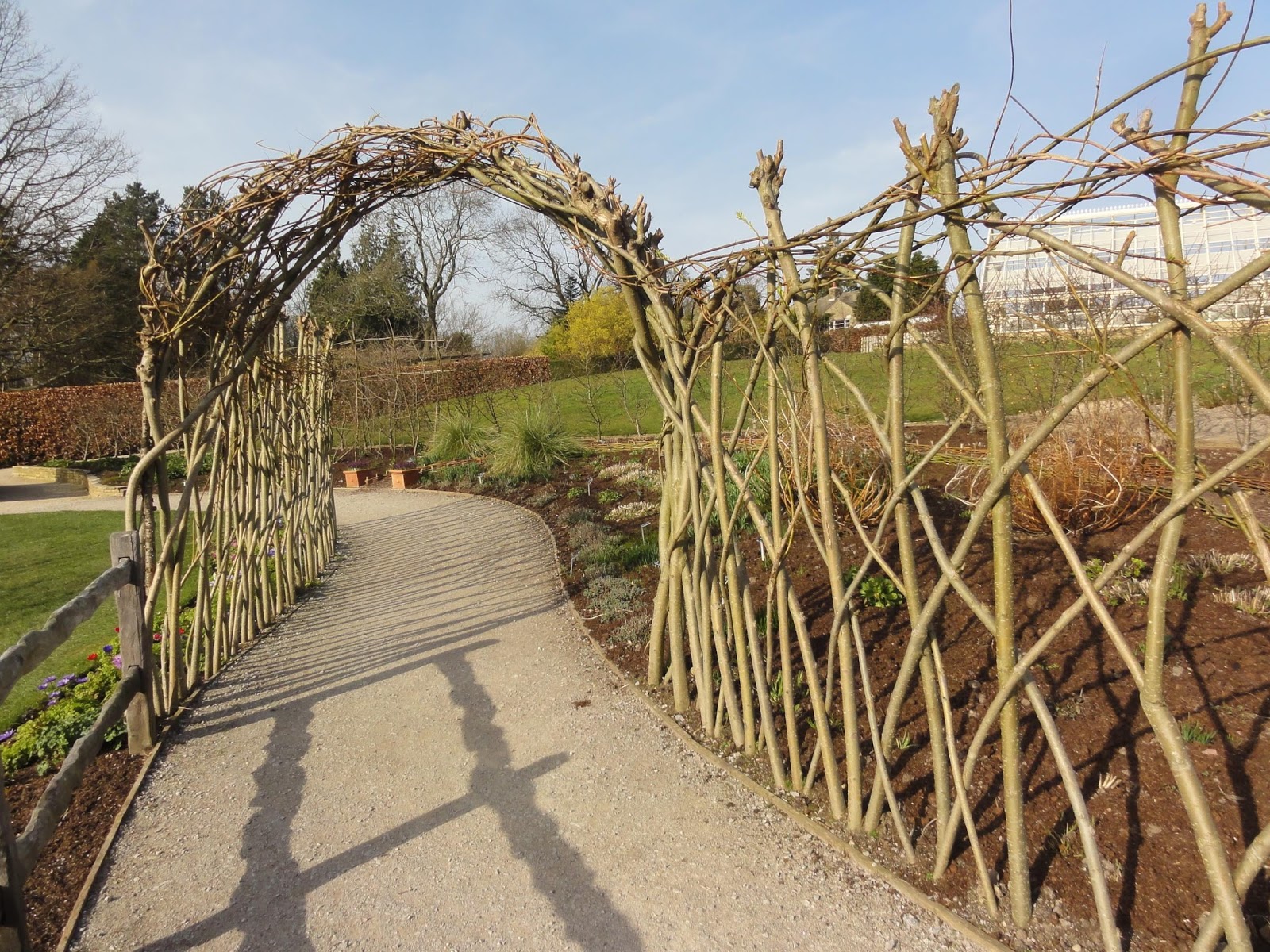
Finally, I adore this 'fencing' and arch, that again takes advantage of the branches of prunned trees. It is a work of art in its own right, and as plants grow up it and spread, it will both create a wind break and give support.


I plan to return to Harlow Carr in Summer and look forward to seeing these plant supports covered in leaves, flowers and crops. But in the meantime, I think they are an attractive addition to the kitchen garden, bringing form and function together with verve, and a bit of fun.

Friday, 14 March 2014

Garden visit: RHS Harlow Carr (photo essay)

It's probably not the best way to start a blogpost, being negative, but here I go... When I visited RHS Harlow Carr several years ago (possibly more than 10 years ago), I remember coming away disappointed. It was mid-April and apart from some bulbs flowering, nothing much appeared to be going on and I left wondering why it was a RHS flagship garden.

My latest visit evoked a completely different response - I loved it. They have obviously done a lot of work during the intervening years and the garden is now most definitely worth visiting. There are many different areas to explore in the gardens, from the Winter Walk, Gardens Through Time and the Kitchen Garden, to the Alpine Zone, Woodland and Scent Garden. I couldn't visit it all parts of the garden (due to the lack of energy because of ME), so this post focuses mainly on the Alpine Zone, with a short visit to other areas.

Alpine Zone
Alpine plants are proof that wonderful delights come in small packages. Here are just some of the Alpines that gave much pleasure. First up, the Hepaticas, to which I'm beginning to develop an addiction.

Hepatica japonica hatsune - my favourite flower of the day

Hepatica nobilis 'Cobalt'

Hepatica x media ballardii

And the following also caught my eye...

Saxifraga x biasoletloi Geoff Wilson

Pinus sylvestris 'LDS8'

Crocus Kosaninii

Draba 'Buttermilk'

Primula 'Masie Michael' - my other favourite of the day

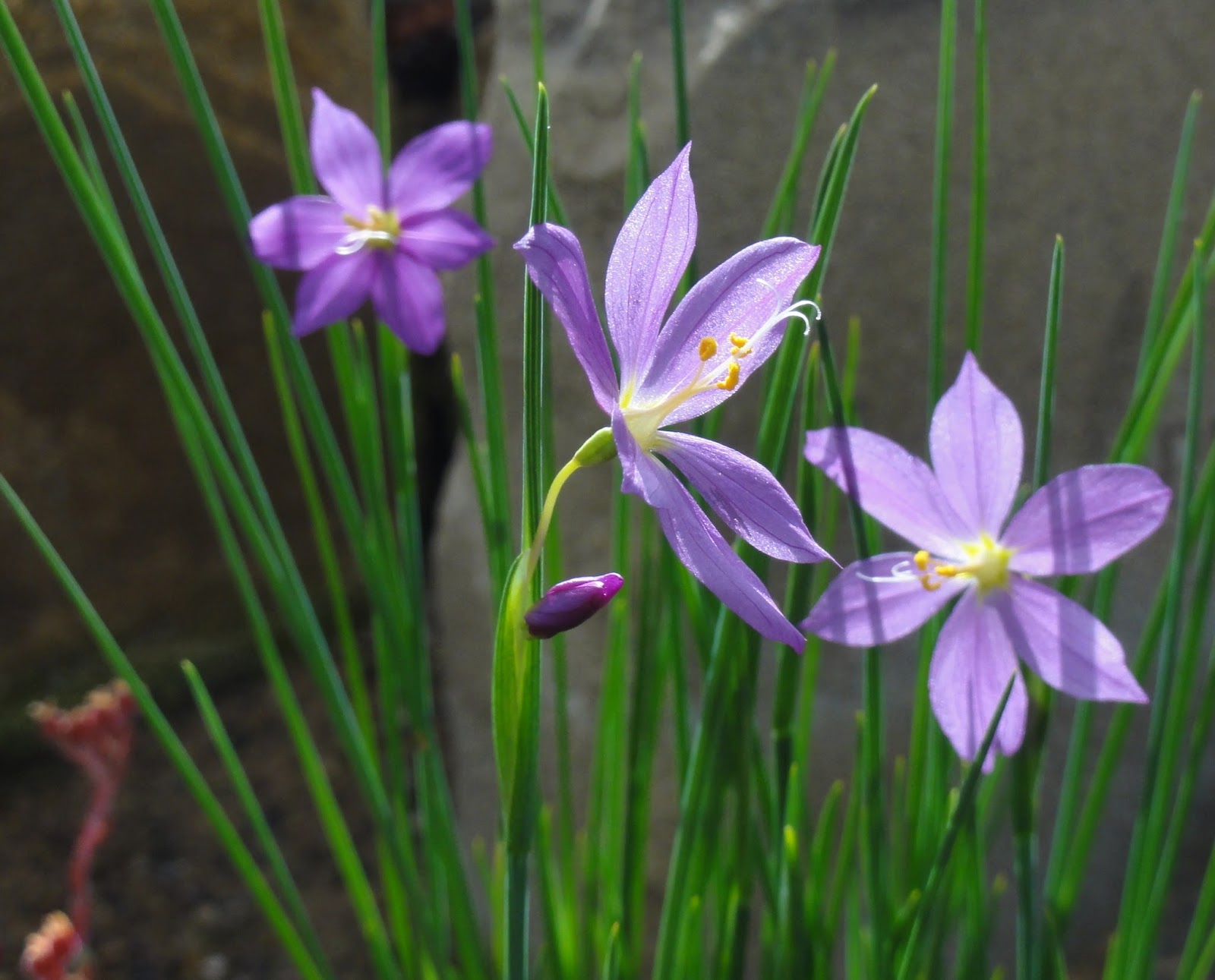
Olsynium douglasii var grandiflora

A wasp also liked Fritillaria crassifolia ssp kurdica

And an unusual flower, that also proved difficult to photograph:

Gethyum atropurpureum
Some collections of alpines...

Using old roof slates to help make an alpine display


Other areas
In other areas of the garden I enjoyed the Winter Walk:

Wonderful colours, and I love the twists & turns of the tree

The witch hazel was still giving off a lovely perfume

The woodland area near the bath house:


A most amusing leaf mould cage:


The poshest ever water butt?


The heather beds:

And I guess there is still some Australian in me: this is what a gum tree is meant to look like, tall and shimmering against a clear blue sky.


And lastly, the curved Yew mounds surrounding Betula utilis jacquemontii near the entrance, which made me laugh (the Yew mounds are so cute!) and contrast well together.


The garden welcomes people to bring their own picnics, which I think I'll do next time. The food in Betty's Cafe is very good once you do get a table, but the long lines and waiting wasn't! Aside from that quibble, I look forward to returning to the garden to explore it further on another day. From what I did see, RHS Harlow Carr is definitely worth visiting.

As I close this post, do indulge me in my return to my favourite flower of the day, Hepatica japonica hatsune, viewing it in a different light.